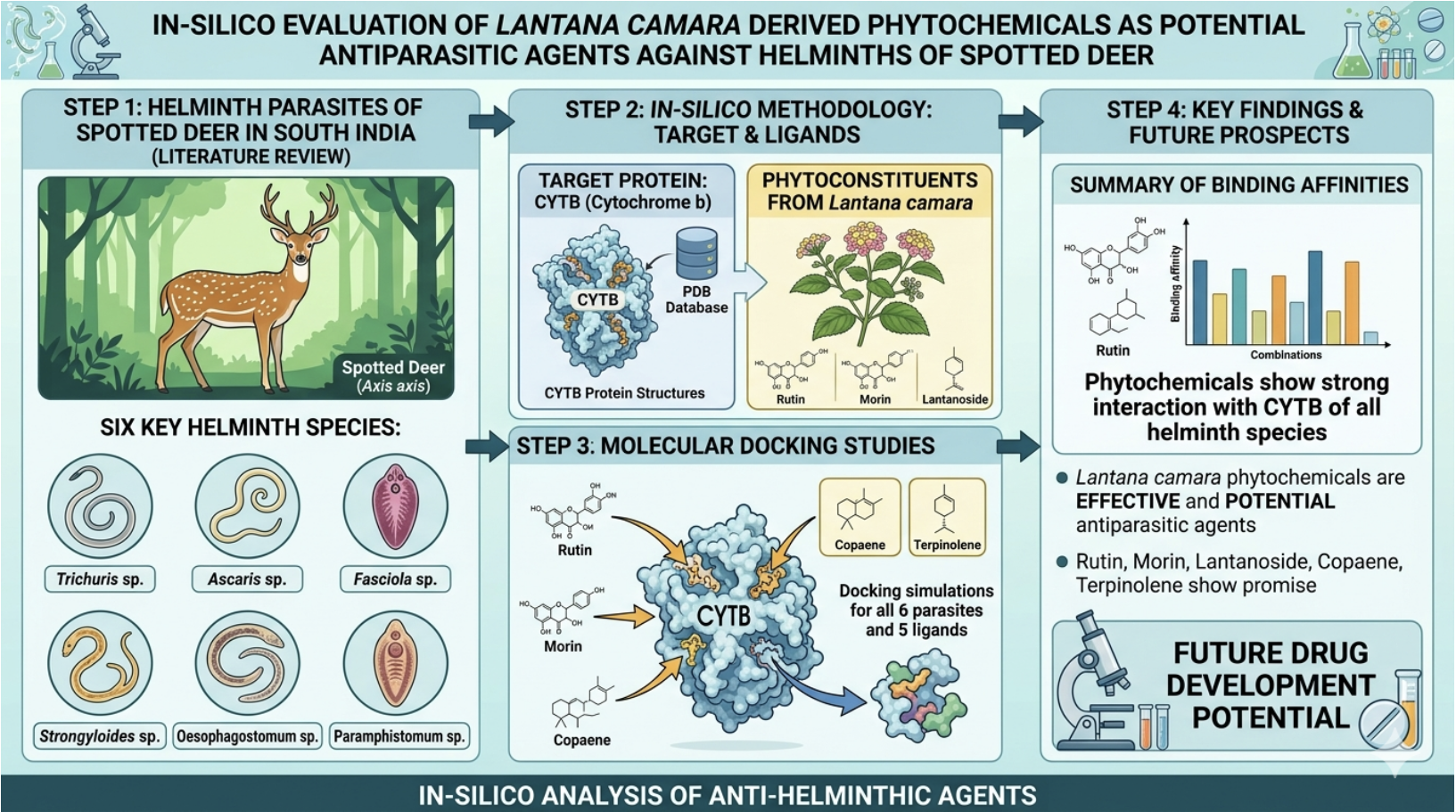
This research investigates the prevalence of parasites in the spotted deer, Axis axis, and explores the potential anthelmintic properties of phytochemicals from the plant Lantana camara using an in-silico approach. The study's primary aim was to investigate parasites’ prevalence and the interaction between the parasitic protein Cytochrome-B (CYTB) and the phytochemicals of Lantana camara. The research was conducted through two key objectives - Parasite Selection and Isolation: A pilot literature study was done to investigate the qualitative and quantitative aspects of parasite prevalence in Axis axis, and 2 species of Trematodes and 4 species of Nematodes each was seen in abundance; hence a total of 6 parasitic species were selected as the study subjects. Molecular Docking Analysis: The study retrieved the 3D structure of the Cytochrome-B (CYTB) protein from the Protein Data Bank (PDB) and the structures of secondary metabolites of Lantana camara from PubChem. Molecular docking software (iGEMDOCK v2.1) was then used to analyse the binding interactions and energies between the ‘CYTB’ protein of six parasitic species and the Lantana camara phytochemicals. The most prevalent parasitic species identified were Strongyloides spp. and Paramphistomum spp., followed by Trichuris spp. and Oesophagostomum spp., which were moderately prevalent. Ascaris spp. and Fasciola spp. were also found but were less common. The in-silico docking analysis revealed that the selected phytochemicals from Lantana camara—specifically Rutin, Morin, Lantanoside, Terpinolene, and Copaene—showing strong affinities with the parasitic CYTB protein. Lantanoside, Rutin and Morin demonstrated the strongest binding affinities, suggesting they are the most potent compounds for inhibiting the growth and metabolism of the parasites. The results from this study validate the anthelmintic potential of these compounds and suggest that exposing infected animals to these secondary metabolites could effectively combat parasitic infections by inhibiting Cytochrome-B. Further in vitro and in vivo studies are encouraged to develop more effective anthelmintic drugs based on these findings.
Research ArticleFREE
In-Silico Evaluation of Lantana camara Derived Phytochemicals as Potential Antiparasitic Agents against Helminths of Spotted Deer
Submitted February 23, 2026
Published March 25, 2026
Computational biology & bioinformatics
Unig Science
Archive Details:
Vol. 2, March 2026
Authors (2)
Inigo Frederick Babu
First AuthorMSc
K Manoj Dhanraj
Corresponding Author 1PhD
Abstract
Keywords
secondary metabolitesspotted deerlantana camaraparasitescytochromemolecular docking